
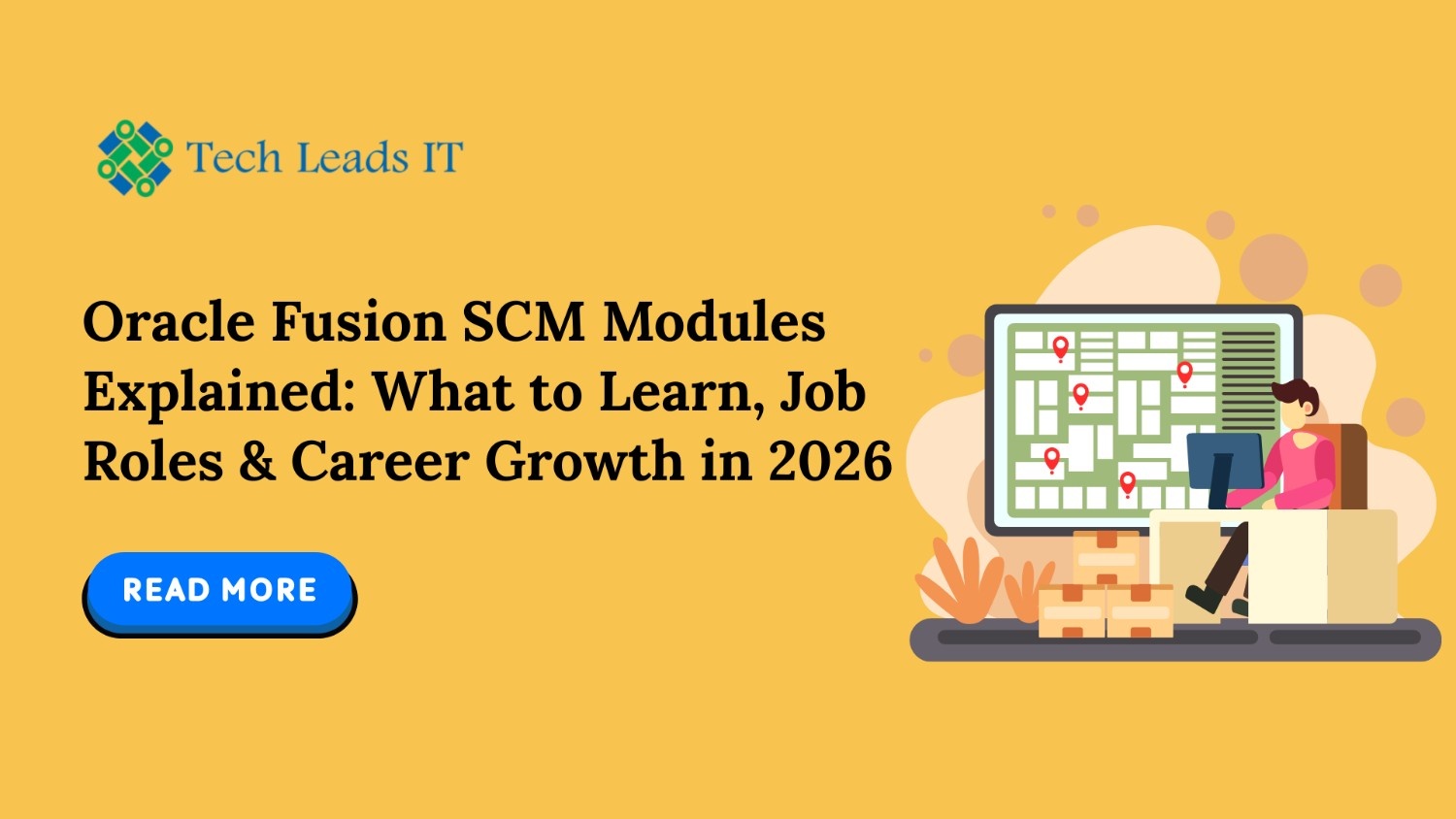
Oracle Fusion SCM Modules Explained: What to Learn, Job Roles & Career Growth in 2026

Author
Krishna
Our Happy Students
Follow us on


As global businesses accelerate supply chain digitization, cloud-based ERP platforms have become central to modern operations. Oracle Fusion Supply Chain Management (SCM) has emerged as a leading solution by enabling real-time visibility, intelligent automation, and scalable control across end-to-end processes. Gaining a clear understanding of Oracle Fusion SCM modules—from planning and procurement to manufacturing —helps organizations streamline operations while building agile, data-driven supply chains.
For professionals aiming for a stable and high-growth career, learning Oracle Fusion SCM is no longer optional—it’s a strategic career decision. This article explains what Oracle Fusion SCM is, highlights the most important modules, explores the job roles they lead to, and shows how the right skills can accelerate career growth in 2026 and beyond.
Why Oracle Fusion SCM Skills Are in High Demand in 2026
Organizations today face increasing challenges such as supply disruptions, rising procurement costs, inventory imbalances, and customer delivery delays. Legacy ERP systems often struggle to handle these complexities due to fragmented data and limited automation.
Oracle Fusion SCM Cloud addresses these gaps by providing:
- End-to-end supply chain visibility
- Integrated planning and execution
- Cloud scalability for global operations
- AI-driven insights for decision-making
Compared to traditional on-premise ERP systems, Oracle Fusion SCM offers faster implementation, continuous updates, and better alignment with modern business models. This is why multinational companies, global service providers, and fast-growing enterprises are actively hiring professionals trained in Oracle SCM Cloud.
Investing in Oracle Fusion SCM Training equips learners with future-ready skills that remain relevant across industries and geographies.
What Is Oracle Fusion SCM?
Oracle Fusion SCM is a comprehensive suite of cloud modules designed to manage the complete supply chain lifecycle—from sourcing raw materials to delivering finished goods to customers.
Instead of operating in silos, Oracle SCM modules share a unified data model, ensuring seamless communication between procurement, inventory, planning, and order fulfillment teams. This integration enables faster decision-making and improved operational efficiency.
Core Oracle Fusion SCM Modules You Should Learn
1. Procurement (Source-to-Pay Process)
The procurement module governs how organizations identify suppliers, purchase goods and services, and manage supplier relationships.
Key capabilities include:
- Supplier onboarding and qualification
- Purchase requisitions and approvals
- Purchase order creation and management
- Contract compliance and spend control
Professionals working in fusion scm procurement help organizations reduce costs, improve supplier performance, and ensure policy adherence.
Common job roles:
- Oracle SCM Functional Consultant – Procurement
- Procurement Analyst
- Purchasing Operations Specialist
2. Inventory Management in Oracle SCM
Effective inventory control directly impacts profitability and customer satisfaction. The inventory management oracle module enables accurate tracking and valuation of stock across warehouses and locations.
Core functions:
- Item and category management
- Inventory transactions and costing
- Lot, serial, and shelf-life control
- Warehouse and material movement
This module is widely used in manufacturing, retail, pharmaceuticals, and logistics-driven businesses.
Career opportunities include:
- Inventory Functional Consultant
- SCM Operations Analyst
- Warehouse Systems Specialist
3. Supply Chain Planning (Demand & Supply)
Accurate forecasting is critical for balancing demand and supply. Oracle’s supply chain planning module supports data-driven planning and scenario modeling.
Key features:
- Demand forecasting based on historical and real-time data
- Supply planning with constraints
- Sales and Operations Planning (S&OP)
- What-if scenario analysis
Planning professionals help companies minimize stockouts, reduce excess inventory, and respond proactively to market changes.
Associated roles:
- Supply Planning Consultant
- Demand Planner
- SCM Analytics Specialist
4. Order Management Cloud (Order-to-Cash)
The order management cloud module manages how customer orders are captured, priced, fulfilled, and delivered.
It covers:
- Order capture and validation
- Pricing and fulfillment orchestration
- Shipping coordination
- Integration with inventory and finance
This module plays a direct role in customer experience and revenue realization.
Typical job roles:
- Order Management Functional Consultant
- Order Fulfillment Analyst
- SCM Business Process Consultant
How Oracle Fusion SCM Modules Work Together (End-to-End Flow)
One of the strongest advantages of Oracle Fusion SCM is its end-to-end integration.
A real-world business flow looks like this:
- Planning forecasts demand and generates supply requirements
- Procurement sources materials from approved suppliers
- Inventory tracks stock movement and availability
- Order Management fulfills customer orders
Because all modules operate on a single cloud platform, data flows seamlessly without manual reconciliation. This cross-module understanding is what companies value most in Oracle SCM professionals.
Oracle Fusion SCM Modules and Career Mapping
| <b>Oracle SCM Module</b> | <b>Primary Job Roles</b> | <b>Career Focus</b> |
| Procurement | SCM Functional Consultant, Procurement Analyst | Cost control, supplier management |
| Inventory Management | Inventory Consultant, Operations Analyst | Warehouse & stock optimization |
| Supply Chain Planning | Demand Planner, Planning Consultant | Forecasting & analytics |
| Order Management | OM Consultant, Fulfillment Analyst | Customer delivery & revenue |
Professionals who start in operations often move into consultant roles within 18–24 months after gaining functional expertise and project exposure.
Who Should Learn Oracle Fusion SCM?
Oracle Fusion SCM is suitable for:
- Fresh graduates from commerce, engineering, or management backgrounds
- Professionals working in procurement, planning roles
- ERP support consultants transitioning to functional positions
- Non-IT professionals seeking entry into enterprise IT careers
With structured learning, even non-technical professionals can build a successful career in Oracle SCM.
Why Structured Oracle Fusion SCM Training Matters
Learning Oracle SCM through random documentation often leads to confusion because the platform is process-driven, not feature-driven.
A structured Oracle Fusion SCM Training program helps learners:
- Understand real business scenarios
- Map modules to job roles
- Learn configuration logic used in implementations
- Prepare confidently for interviews and projects
Well-designed training bridges the gap between theoretical knowledge and real-world execution.
Skills That Increase Hiring Potential
To stay competitive, SCM professionals should develop:
- Strong functional process understanding
- ERP configuration knowledge
- Business communication skills
- Basic reporting and analytics awareness
Cross-module exposure significantly improves long-term career growth and job stability.
Frequently Asked Questions
1.What is Oracle Fusion SCM used for?
Oracle Fusion SCM is used to manage procurement, inventory, planning, and order fulfillment through a unified cloud-based ERP platform.
2.Which Oracle Fusion SCM module should beginners learn first?
Most beginners start with procurement or inventory modules, as they provide a strong foundation in supply chain processes.
3.Is Oracle Fusion SCM a good career choice in 2026?
Yes. Cloud ERP adoption continues to grow globally, and Oracle SCM skills remain in high demand across industries.
4.Do I need coding skills to learn Oracle Fusion SCM?
No. Oracle SCM is a functional domain where process knowledge is more important than coding.
5.When is the next Oracle Fusion SCM training batch or demo?
The next Oracle Fusion SCM training batch features a free live demo on February 18th at 8:00 AM (IST). This demo gives participants a clear overview of the course curriculum, training methodology, and what to expect before enrolling.
Final Thoughts: Building a Future-Ready SCM Career
Oracle Fusion SCM is not just a software skill—it’s a career ecosystem that connects business operations with cloud technology. Professionals who invest time in understanding modules, end-to-end flows, and real business use cases position themselves for long-term success.
With the right learning path and hands-on exposure, Oracle Fusion SCM can open doors to global opportunities, stable demand, and meaningful career growth well beyond 2026.
Categories
Trending Blogs
Get Notified about Latest Blogs, Interview Questions & Job Alerts
Stay updated with the latest insights, trends, and expert tips on Oracle Fusion SCM. Subscribe to our newsletter and never miss an update!
Explore Our Related Blogs
0
LikesConnect with us


Subscribe




Top Categories
Popular Courses


© Copyright Tech Leads IT. All Rights Reserved
Stay Connected with us


